

How to Structure an Effective Harp Practice Routine
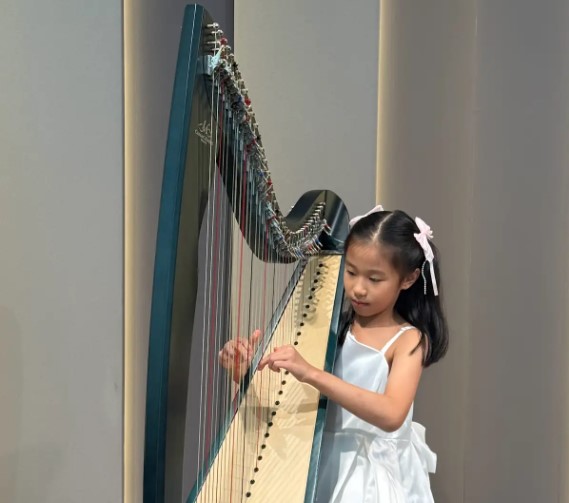
Many harp students practise regularly but still feel that progress is slower than expected. Often, the problem is not the amount of time spent practising, but how the practice is structured. Without a clear routine, students may repeat the same mistakes, lose focus, or feel frustrated when difficult passages refuse to improve.
Music educator and harp instructor Katryna Tan describes effective practice as the “Action of Learning Music.” (Reference: “Unleash the musician in You”, Section 2) Instead of practising randomly, students are encouraged to practise with intention, structure, and awareness. When practice becomes a thoughtful process rather than simple repetition, students gain confidence, improve more consistently, and begin to enjoy the journey of learning music.
Understanding Your Practice Goals
Short-Term Goals
A strong practice routine begins with clear short-term goals. These are small targets that guide each practice session and help students stay motivated.
For harp students, short-term goals might include:
- mastering a scale or technical exercise
- improving a difficult section of a piece
- completing one page of new repertoire
By breaking practice into manageable goals, students experience steady progress rather than feeling overwhelmed.
Long-Term Development
Long-term goals help shape a student’s overall musical journey. These goals often include preparing for performances, music examinations, or building a strong repertoire.
Having long-term goals encourages students to practise with purpose. Each small improvement during daily practice contributes to larger musical milestones over time.
Ideal Practice Duration by Level
Consistency is often more important than long practice sessions. Regular practice builds stronger habits and helps students retain what they learn.
Beginners
Beginner harp students typically practise 20–30 minutes per session. At this stage, practice focuses on posture, hand position, basic technique, and reading music.
Short and focused sessions help beginners stay engaged while building strong foundations.
Intermediate Students
Intermediate students usually practise 45–60 minutes per session. Practice sessions begin to include a balance of technical exercises and repertoire development.
At this level, students start refining their musical expression while strengthening their technical control.
Advanced Students
Advanced harpists may practise 90 minutes or more per day, especially when preparing for performances or examinations.
Practice sessions often include detailed technical work, interpretation of repertoire, and performance preparation.
Building the Perfect Warm-Up Routine
Warm-ups are an important part of effective practice because they prepare both the body and mind for focused learning.
Physical and Mental Preparation
Before playing, students should take a moment to check their posture and relax their shoulders and arms. Harp playing requires fluid movement, so releasing tension helps prevent injury and supports good tone production.
Students are also encouraged to practise in a quiet and focused environment, where distractions are minimal, and concentration can be maintained.
Technical Warm-Ups
Technical warm-ups help strengthen finger control and coordination.
Common warm-up exercises include:
- scales
- arpeggios
- finger independence drills
These exercises develop the technical foundation that allows students to play music smoothly and confidently.
Tone and Touch Exercises
Tone production is a key element of harp playing. Students practise controlling the strength and placement of their fingers to produce a clear and resonant sound.
Developing good tone early allows students to express music more effectively as they progress.
Developing Strong Harp Technique
Strong technique allows harpists to play comfortably and expressively.
Hand Independence
One of the early challenges in harp playing is coordinating both hands. Exercises that develop hand independence help students control different musical patterns at the same time.
With consistent practice, these movements gradually become natural and fluid.
Tone Production
Producing a beautiful harp tone requires careful control of finger movement and timing. Students learn how to shape phrases, balance both hands, and create musical colour through their touch on the strings.
These skills allow the harp to truly sing.
Technical Problem-Solving
When students encounter difficult passages, simply repeating them is often ineffective. Instead, musicians are encouraged to practise strategically.
One helpful strategy is the “9 out of 10 rule.” A passage should be played correctly nine out of ten times before it is considered secure. This approach builds consistency and confidence in performance.
Structuring Repertoire Practice
Learning new music is one of the most enjoyable parts of harp practice, but it also requires thoughtful preparation.
Learning New Pieces
Before practising a new piece, students can benefit from analysing the music first.
In the “Action of Learning Music” framework, students are encouraged to decode the S.C.O.R.E. of the music:
- Structure – How the piece is organised
- Creator – Who composed the music
- Origin – The musical period or style
- Rhythm – Key rhythmic patterns
- Expression – The mood or character of the piece
The S.C.O.R.E. framework is further explored in Katryna Tan’s book Unleash the Musician in You, where she shares her approach to helping students develop deeper musical understanding and more effective practice habits. If you’re interested in learning more about the book or where to get a copy, you can click here. Understanding these elements helps students connect with the music more deeply instead of memorising notes mechanically.
Refining Existing Repertoire
Once a piece is learned, practice shifts toward refinement.
Students work on:
- musical phrasing
- dynamic contrast
- expressive interpretation
These details transform a technically correct performance into a musical one.
Performance Preparation
Preparing for performance requires a different kind of practice. Students often practise full run-throughs of their pieces to simulate performance conditions.
This helps build confidence, concentration, and the ability to communicate music clearly to an audience.
Tracking Progress
Tracking progress helps students stay motivated and understand how their skills are developing.
Practice Journals
Many students benefit from keeping a practice journal. This may include written notes about daily practice goals, reflections after lessons, or areas that need improvement.
Recording practice helps students remain organised and aware of their progress.
Teacher Feedback
Regular feedback from a teacher is essential for effective practice. Teachers help identify technical issues, adjust practice strategies, and guide students toward their musical goals.
With proper guidance, students avoid developing habits that may slow their progress.
Self-Evaluation
Recording practice sessions is another powerful learning tool. Listening back allows students to hear their playing from a different perspective and notice details they might miss while performing.
Self-evaluation helps students develop independence and musical awareness.
Conclusion
An effective harp practice routine is not about practising for long hours, but about practising with intention and awareness. When students combine structured routines, clear goals, and thoughtful reflection, they build strong technical skills while developing confidence and musical expression.
Katryna Tan, the famous harp soloist and educator guides her students using principles such as the “Action of Learning Music,” where practice becomes a meaningful process of discovery and growth. These ideas are part of her teaching philosophy and are explored further in her book Unleash the Musician in You.
If you would like to develop an effective harp practice routine and grow as a confident musician, we invite you to learn with Katryna Tan. Get in touch or book a trial harp lesson to begin your harp journey with an experienced and dedicated harp educator.