
Lever Harp vs Pedal Harp: Which Harp Instrument Should You Choose?
For anyone beginning their harp journey, one of the first questions that often comes up is: Which harp should I learn on? The two most common types used in lessons and performances are the lever harp and the pedal harp. While both share the same beautiful, flowing sound, they differ in structure, size, and musical capabilities.
Choosing the right harp instrument can greatly shape your learning experience. A harp that suits your level and goals allows beginners to build confidence, develop proper technique, and enjoy making music from the very beginning. Discovering the joy of music is an important part of becoming a musician, and starting with the right instrument helps students stay motivated as they grow.
In this guide, we will explore the key differences between lever harps and pedal harps, so you can better understand which harp instrument may be the best fit for your harp lesson.
Structural Differences
Strings and Mechanisms
The biggest difference between a lever harp and a pedal harp lies in how they change pitch.
A lever harp uses small levers located near the top of each string. When a lever is flipped upward, it shortens the string slightly and raises the pitch by a semitone. This allows the harpist to play in different keys, although the adjustments are made manually with the hands.
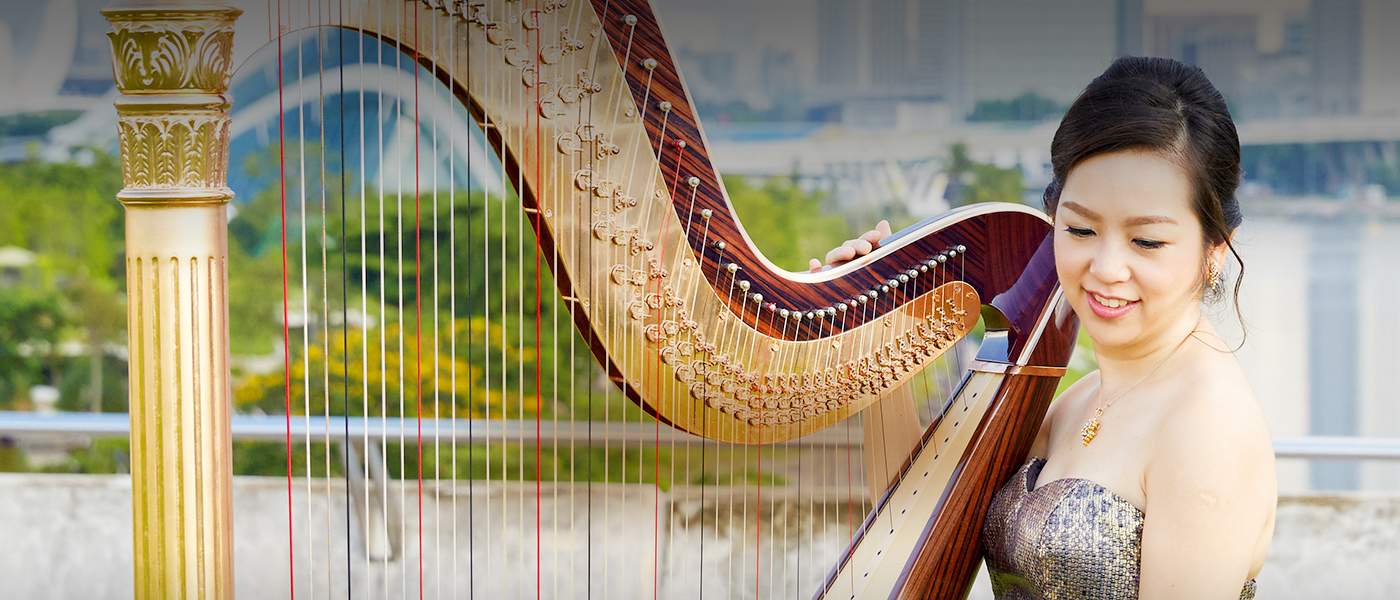
A pedal harp, on the other hand, uses a much more complex mechanism. At the base of the instrument are seven pedals, each corresponding to a note of the musical scale. By pressing these pedals with their feet, harpists can instantly change the pitch of all strings of the same note across the harp.
This system allows pedal harpists to switch keys quickly during performance, which is why the pedal harp is commonly used in orchestras and advanced repertoire.
Size and Portability
Another important difference between the two harp instruments is size.
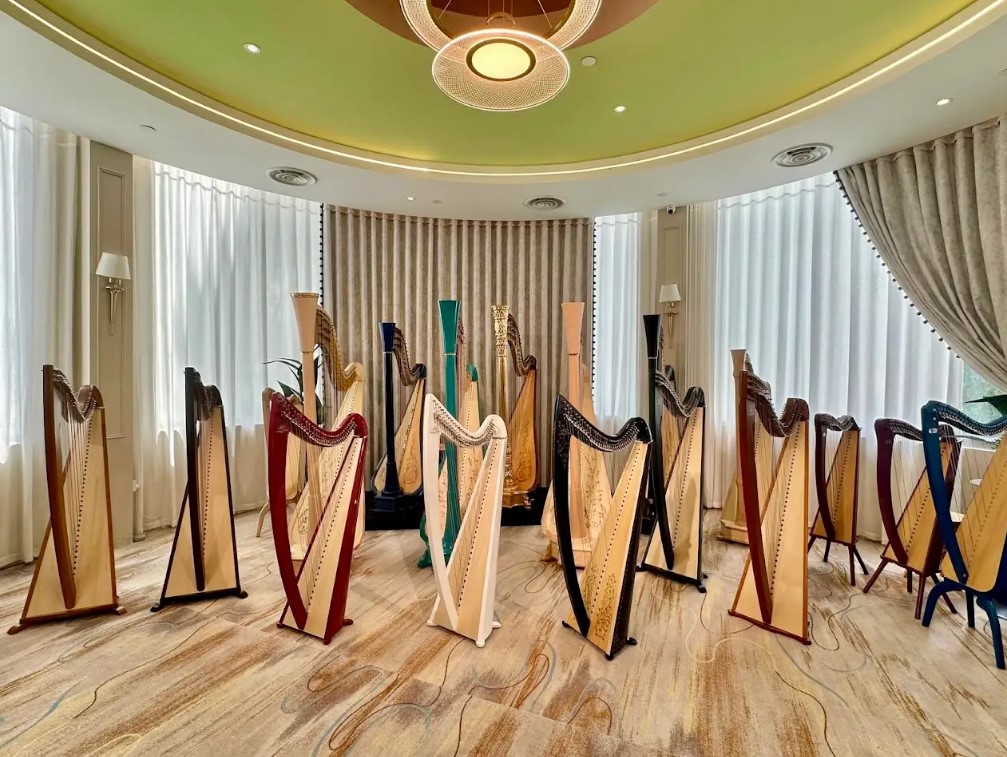
Lever harps are generally smaller and lighter. They can range from compact travel harps to larger full-sized lever harps used by intermediate students. Because of their lighter weight, they are easier to transport between lessons, rehearsals, or performances.
Pedal harps are significantly larger and heavier. A full concert pedal harp can weigh around 35–40 kilograms and stands much taller than a lever harp. Moving a pedal harp usually requires a specialised harp trolley and careful handling.
In general, beginner students start on the Lever harp and progress onto the pedal harp if they wish to. One can also continue to play on the lever harp to advanced stages (ABRSM Grade 8) if they choose to remain on the lever harp.
Sound and Musical Range
Tonal Differences
Both lever harps and pedal harps produce the same signature harp sound, rich, resonant, and flowing. However, there are subtle tonal differences between the two instruments.
Lever harps typically produce a warm and intimate tone, making them well-suited for solo playing, small ensembles, and folk or contemporary music. Their sound is expressive and beautiful, especially in smaller performance settings.
Pedal harps tend to produce a fuller and more powerful sound. Because they are larger instruments with greater string tension and resonance, they project more strongly in large concert halls and orchestras.
Repertoire Suitability
The type of harp also affects the repertoire that can be performed.
Lever harps are commonly used for:
- Folk music
- Celtic harp repertoire
- Early music
- Contemporary pieces written specifically for the lever harp
Pedal harps are required for much of the classical orchestral repertoire. Many classical compositions rely on quick key changes that are only possible using the pedal system.
As students progress, some eventually transition from lever harp to pedal harp if they wish to explore orchestral music or pursue advanced studies.
Cost Comparison
Purchase Costs
Another major factor when choosing a harp instrument is cost.
Lever harps are generally much more affordable than pedal harps. Depending on the brand and size, lever harps may range from approximately:
SGD $2000-$6000+
Pedal harps are significantly more expensive due to their complex mechanism and larger structure. A professional pedal harp may cost anywhere from:
SGD $20,000 and above
Because of this large price difference, most beginners start with a lever harp before considering a pedal harp later.
Maintenance Costs
Maintenance is another important consideration.
Lever harps require:
- regular tuning
- occasional string replacement
- general care of the wood and levers
Pedal harps require additional maintenance because of their mechanical system. The pedal mechanism needs periodic adjustment and servicing by specialised harp technicians.
Who Should Choose a Lever Harp?
For many students, the lever harp is the ideal starting instrument.
Lever harps are especially suitable for:
- children learning their first instrument
- adult beginners exploring harp music
- students who want a portable instrument
- learners interested in folk or contemporary harp music
Lever harps allow beginners to focus on the most important skills first:
- posture and hand position
- basic technique
- reading music
- developing musical expression
In the early stages of learning, the goal is not to master a complex instrument but to discover the joy of making music. When students experience that sense of enjoyment, they often develop stronger motivation and confidence in their musical journey.
Who Should Choose a Pedal Harp?
Pedal harps are usually chosen by advanced students or aspiring professional musicians.
This instrument may be suitable for students who:
- are preparing for orchestral playing
- plan to study music at a conservatory level
- wish to perform advanced classical repertoire
- have already developed a strong harp technique
Because the pedal harp requires coordination between both hands and both feet, it demands a higher level of musical and technical understanding.
For many harpists, transitioning to pedal harp becomes a natural step once they have built a strong foundation on the lever harp.
Conclusion
Choosing between a lever harp and a pedal harp is an important step for anyone beginning their harp journey. While both instruments share the same beautiful voice, they serve different purposes depending on the student’s experience, goals, and musical interests.
It allows students to focus on developing technique, musical understanding, and the joy of playing music. As skills grow, some students may later transition to the pedal harp to explore more advanced repertoire and performance opportunities.
Harp instructor Katryna Tan, guides her students in choosing the harp instrument that best supports their learning journey. She helps beginners build strong foundations while nurturing musical expression, confidence, and a love for the harp.
If you are exploring harp lessons in Singapore and would like to learn more about choosing the right harp instrument, connect with Katryna Tan. Book a trial lesson today to begin your musical journey with an experienced and dedicated harp educator.
If you’d like to learn more about different harp options, you may also explore www.raveharps.com or sg.camac-harps.com, where you can discover various harp models and find additional guidance when choosing your harp instrument.