
The Ultimate Guide to Learning the Harp in Singapore: From Beginner to Performer
The harp has captivated listeners for centuries with its shimmering, lyrical sound. Whether heard in an orchestra, a film soundtrack, or a quiet solo performance, the instrument carries a magical quality that few others possess. Many people describe harp music as calming, expressive, and almost storytelling in nature.
In Singapore, interest in harp learning has grown steadily in recent years. More parents are exploring harp lessons for their children, while adults are discovering that it is never too late to start learning a musical instrument. Music schools and specialised academies now offer structured harp programmes that guide students from their first notes to confident performance.
Learning the harp is not just about playing music. It is about discovering creativity, building discipline, and expressing emotions through sound. As music educator and harp instructor, Katryna Tan explains in her teaching philosophy, the musical journey should begin with joy and curiosity. When students experience the fun in music, they develop the motivation to practise and grow as musicians.
If you’re exploring harp lessons in Singapore, this guide will help you start your musical journey with clarity and confidence.
Why Learn the Harp?
The harp is more than a beautiful instrument. Learning offers meaningful benefits that extend beyond music itself.
Musical and Cognitive Benefits
Learning the harp engages both the mind and body. Because the instrument uses both hands independently while reading music, it develops several important skills.
Some key benefits include:
- Improved coordination – both hands must move independently across the strings
- Stronger memory – students memorise patterns, pieces, and musical structures
- Focus and discipline – consistent practice builds patience and concentration
- Analytical thinking – students learn to understand musical patterns and structure
Music educators often emphasise that learning an instrument helps children build life skills. The process of practising, improving, and performing teaches perseverance and responsibility.
For many students, music becomes an important part of their personal development.
Emotional Expression and Creativity
One of the most rewarding aspects of learning the harp is its ability to express emotion.
Music is not just about playing the correct notes. It is about telling a story through sound. Students gradually learn to shape phrases, control dynamics, and express feelings such as joy, sadness, or excitement through their playing.
In Katryna Tan’s teaching philosophy, students are encouraged to practise with heart and emotion, not simply repetition. Music becomes meaningful when the player understands the feelings behind it.
For many students, playing the harp becomes:
- A creative outlet
- A form of stress relief
- A way to express emotions
- A source of personal confidence
Even beginners often find that the sound of the harp is naturally calming and rewarding.
Performance and Career Opportunities
While many people learn the harp as a hobby, the instrument also offers exciting performance opportunities.
Harpists can perform in a variety of settings:
- Solo performances at recitals and concerts
- Chamber ensembles with other instruments
- Orchestras and symphony performances
- Musical theatre productions
- Recording sessions and film music
Professional harpists may also pursue careers such as:
- Music educators
- Orchestra musicians
- Recording artists
- Collaborative performers with dancers, singers, and theatre productions
Even for hobbyists, performing on stage can be an incredibly fulfilling experience.
Understanding the Types of Harps
Before starting harp lessons, it is helpful to understand the different types of harps available.
-
Lever Harp (Beginner-Friendly Option)
The lever harp is often the first instrument used by beginner harp students.
This harp uses small levers on each string that can raise the pitch when engaged. It allows players to perform in different keys without the complex pedal system found on concert harps.
Advantages
- Smaller and lighter than pedal harps
- More affordable for beginners
- Easier to transport
- Suitable for home practice and lessons
Suitable Age Groups
Lever harps are commonly used by:
- Children starting music lessons
- Teenagers learning harp for the first time
- Adult beginners
-
Pedal Harp (Professional Instrument)
The pedal harp, also known as the concert harp, is the instrument commonly seen in orchestras.
It includes seven pedals at the base of the harp. These pedals allow the player to change the pitch of strings instantly, enabling complex key changes during performance.
Characteristics
- Larger and heavier instrument
- Highly versatile for advanced repertoire
- Standard instrument for orchestral harpists
Because of its complexity, students usually transition to pedal harp only after building a strong technical foundation.
When Do Students Transition?
Many students move to pedal harp when they:
- Reach an intermediate or advanced level
- Prepare for orchestral playing
- Plan to pursue conservatory studies
How to Choose the Right Harp for You
Choosing a harp depends on several practical factors.
Consider the following:
Budget
Harps vary greatly in price. Beginners often start with rentals or smaller lever harps.
Musical Goals
Ask yourself:
- Are you learning for fun?
- Do you hope to perform professionally one day?
Your goals will influence the type of harp recommended.
Teacher Guidance
A good harp teacher will recommend an instrument suitable for the student’s level and goals.
Cost of Learning the Harp in Singapore
Learning the harp is an investment, as it is for all musical instruments, but many families find the experience deeply rewarding.
Instrument Investment
Students typically choose between buying and renting an instrument.
Renting
Rental programmes allow students to start learning without a large upfront investment.
Buying
Students who commit to long-term learning often purchase their own harp.
Entry-level lever harps may cost:
- Between SGD $2000-$6000+
Professional pedal harps can exceed:
- Estimated start from around SGD $20000+
Lesson Fees
Harp lessons in Singapore fees vary depending on the teacher and lesson format.
Common lesson formats include:
- Private lessons (one-to-one instruction)
- Group classes for beginners
- Online harp lessons
- Advanced coaching sessions
Quality teaching usually includes:
- Personalised curriculum
- Technical guidance
- Repertoire development
- Performance preparation
Additional Costs
Besides lessons and instruments, students may also encounter:
- String replacements
- Harp accessories (bench, tuning key, music stand)
- Music scores and books
- Concert attire for performances
These costs are usually manageable and spread out over time.
A Step-by-Step Harp Learning Roadmap
Every musician progresses at their own pace, but most harp students move through several stages of development.
Stage 1: Beginner (0-12 Months)
During the first year, students focus on building a strong foundation.
Key skills include:
- Correct posture and hand position
- Basic finger technique
- Reading musical notation
- Playing simple melodies
Students also begin experiencing the joy of producing music from the harp.
Early repertoire often includes simple pieces that help students develop confidence.
A good teacher provides:
- Clear technical guidance
- Encouragement and positive learning experiences
- Structured practice strategies
Stage 2: Intermediate (1–3 Years)
As students gain confidence, they begin developing greater musical control.
Skills introduced during this stage include:
- Advanced fingering patterns
- Greater musical expression
- Dynamic control
- More complex repertoire
Students may also begin:
- Playing in ensembles
- Participating in music exams
- Performing in recitals
At this stage, learning music becomes more than technique. Students start to interpret the meaning behind the music.
Stage 3: Advanced and Pre-Professional
Advanced students explore the deeper artistry of harp performance.
This stage may include:
- Complex classical repertoire
- Interpretation and phrasing
- Audition preparation
- Competition participation
Students also develop stage presence and performance confidence.
The focus shifts from simply playing notes to communicating musical ideas.
How to Practise Effectively
Practising the harp is most effective when it is structured and focused.
Music educators often emphasise that smart practice is more important than long practice.
Daily Practice Structure
Practice time typically increases as students progress.
Recommended practice durations:
- Beginner: 20–30 minutes
- Intermediate: 45–60 minutes
- Advanced: 90 minutes or more
Regular, consistent practice is more effective than long sessions once a week.
Practice Components
A balanced practice session usually includes several elements.
- Warm-ups: Simple exercises help prepare the hands and fingers.
- Technical drills: Scales and patterns strengthen finger control and coordination.
- Repertoire practice: Students work on their current pieces.
- Sight-reading: Reading new music helps build musical fluency. Music educators also encourage students to practise with intention and focus, rather than repeating pieces mechanically.
Tracking Progress
Many students improve faster when they track their progress.
Helpful strategies include:
- Keeping a practice journal
- Recording practice sessions
- Reviewing feedback from teachers
These methods help students identify areas for improvement.
Preparing for Your First Performance
Performing is an exciting milestone in every musician’s journey.
Choosing the Right Piece
Students should perform music that:
- suits their level
- highlights their strengths
- allows musical expression
A good teacher will guide repertoire selection.
Building Stage Presence
Performance is not only about technical accuracy. It also involves confidence and communication.
Students learn to:
- walk on stage calmly
- focus their attention on the music
- connect with the audience
Stage Etiquette
Young musicians are also taught professional habits, such as:
- arriving early
- tuning the harp properly
- acknowledging the audience
These habits build confidence and professionalism.
Common Beginner Mistakes (And How to Avoid Them)
Every student faces challenges when learning a new instrument, and the harp is no exception. In fact, making mistakes is a natural part of the learning process. What matters most is recognising these challenges early and learning how to correct them with the right guidance.
Poor Posture
Good posture is the foundation of harp playing. Because the harp is a large instrument, the way a student sits and positions their body greatly affects their comfort and sound.
If posture is incorrect, students may experience:
- tension in the shoulders and arms
- difficulty reaching the strings comfortably
- inconsistent tone quality
Over time, poor posture can even lead to fatigue or strain during longer practice sessions.
A good harp teacher will guide students on how to sit properly, position the harp correctly, and maintain relaxed hand and arm movements. When posture is correct, playing becomes much more natural and enjoyable.
Rushing Through Technique
Many beginners are eager to play beautiful music as quickly as possible. While enthusiasm is wonderful, rushing through technical foundations can create problems later on.
For example, students may:
- skip careful finger placement
- play faster than they can control
- overlook details in the music
Developing technique slowly allows students to build strength, control, and accuracy. In the long run, this approach leads to smoother playing and greater musical confidence.
A helpful mindset is to focus on playing correctly first, then gradually increasing speed.
Skipping the Fundamentals
Scales, exercises, and technical drills may seem simple, but they are extremely important for harp development.
These foundational exercises help students develop:
- finger strength
- hand coordination
- tone control
- familiarity with the instrument
Skipping these basics might save time in the short term, but it often creates technical limitations later when students attempt more advanced repertoire.
Strong fundamentals make it much easier to learn new music and progress confidently.
Over-Practising
It might sound surprising, but practising too much can actually slow progress. Long practice sessions without focus can lead to fatigue, frustration, and careless mistakes.
Instead of simply practising longer, students should aim to practise more effectively.
A balanced practice session usually includes:
- short warm-up exercises
- focused technical work
- repertoire practice
- short breaks to refresh the mind
Music educators often remind students that quality practice is more important than quantity. Thoughtful and focused practice helps students improve much faster.
Lack of Guidance
Perhaps the most common challenge beginners face is learning without proper guidance. Without an experienced teacher, students may develop habits that are difficult to correct later.
These habits might include:
- incorrect hand position
- inefficient finger movement
- misunderstanding musical expression
A qualified harp educator helps students avoid these issues by providing clear instruction and personalised feedback.
More importantly, a teacher helps students understand that learning music is not only about playing the right notes. It is also about developing musical expression, confidence, and enjoyment in the process.
With the right guidance and a positive mindset, beginner mistakes quickly become valuable learning experiences that help students grow into confident musicians.
Becoming a Professional Harpist: Career Pathways
For students who wish to pursue music professionally, the harp offers several exciting pathways. The journey usually begins with strong musical foundations and gradually develops into performance experience, artistic expression, and professional opportunities. As many music educators emphasise, becoming a musician is not only about technical skill, but also about developing confidence, discipline, and a deep understanding of music.
A. Formal Training Routes
Many aspiring harpists begin their journey through formal music education. Students may study at specialised music schools, conservatories, or universities that offer structured training in performance, music theory, and repertoire.
Some advanced students also pursue overseas study to broaden their musical exposure and learn from internationally recognised teachers. Formal training helps students build strong technical foundations while developing a deeper understanding of musical interpretation and artistry.
B. Performance Development
As harpists progress, gaining performance experience becomes an important part of their growth. Many students participate in competitions, music festivals, recitals, and orchestral training programmes to develop their stage presence and confidence.
These experiences help musicians move beyond simply playing notes to truly communicating music with expression and emotion. Performing regularly also teaches students how to prepare mentally and musically for the stage, an important part of becoming a complete musician.
C. Building a Sustainable Career
Professional harpists often build diverse and flexible careers. Many combine performing with teaching, recording projects, and collaborations with orchestras, chamber groups, or creative productions.
A successful music career often blends several of these pathways. By developing both artistic skills and practical experience, harpists can build a meaningful and sustainable life in music while continuing to grow as performers and educators.
Why Learn with a Professional Harp Educator
Learning the harp is most rewarding when guided by experienced educators.
A professional harp teacher provides:
- personalised learning plans
- structured technical training
- performance mentorship
- exam preparation guidance
- long-term musical development
More importantly, they nurture students to become complete musicians, not just harp players.
Frequently Asked Questions
Is the harp difficult to learn?
The harp may look complex, but many beginners are surprised by how naturally beautiful it sounds even in the early stages. Like any instrument, it requires patience and regular practice, but when students focus on the joy of making music, learning becomes much more rewarding. Music educators often encourage students to practise with intention and heart, not just repetition.
How old should a child start?
Many children begin harp lessons around 5 or 6 years old, depending on their physical readiness and interest in music. At this stage, lessons focus on building curiosity, confidence, and enjoyment in playing simple melodies. When learning begins with fun and encouragement, children often develop a lifelong love for music.
Can adults learn the harp?
Absolutely. Many adults begin learning the harp later in life and find it both relaxing and fulfilling. With consistent practice and guidance, adult beginners can develop strong musical skills and enjoy expressing themselves through music.
Do I need my own harp?
Not necessarily. Many beginners start with rental harps so they can explore the instrument before committing to a purchase. As students progress and become more confident, they often choose to invest in their own harp.
How long before I can perform?
With consistent practice, many students can perform simple pieces within their first year of learning. Performing helps students build confidence and experience the joy of sharing music with others. Over time, these experiences help students grow into expressive musicians.
Are online lessons effective?
Yes, online harp lessons can be very effective when guided by an experienced teacher and supported by regular practice. With clear instruction and personalised feedback, students can continue progressing even outside a physical classroom.
How often should I practise?
Beginners should aim to practise several times a week to build good habits and confidence on the instrument. Even short, focused practice sessions can lead to steady progress. Consistency and mindful practice are far more effective than long, unfocused sessions.
Begin Your Musical Journey with Confidence
Learning the harp is a beautiful and rewarding journey. From your first gentle notes to performing music with confidence, every step helps you grow not only as a musician but also as a person. Along the way, students develop discipline, creativity, and the ability to express emotions through music.
Katryna Tan’s teaching approach focuses not only on technique but also on musical expression, confidence, and the joy of making music. Whether you are a parent looking for harp lessons for your child or an adult beginner ready to start something new, she is here to guide you at every stage of your musical journey.
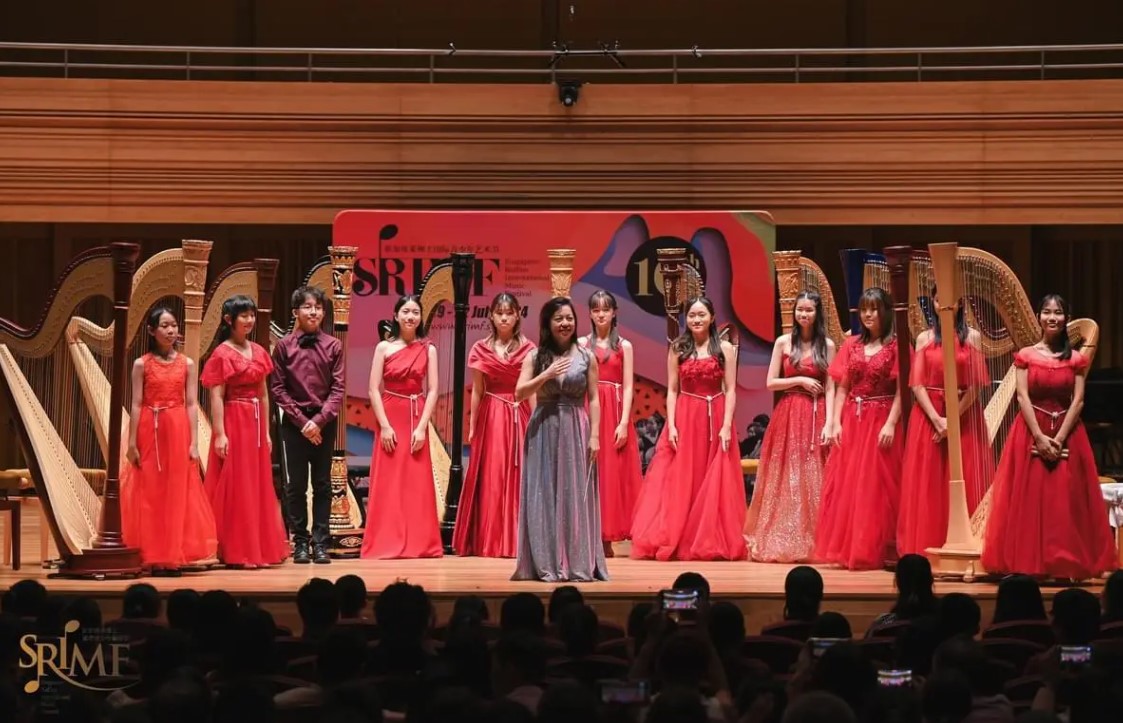
More than an experienced Harp educator, Katryna Tan has nurtured a team of Harp educators in Rave Harps. This will help enhance the learning experience of your child, which includes a wholesome experience, including solo performance, ensemble performance, Support from a team of teachers, and performance platforms.
As an experienced harp educator, Katryna Tan provides structured learning, performance opportunities, and personalised guidance to help students progress from beginners to confident performers.
If you are ready to begin learning harp lessons in Singapore, start your journey with Katryna Tan at Rave Harps. Book a trial harp lesson today or get in touch to learn more about the available harp programmes. We look forward to welcoming you into a supportive and inspiring musical community.